The Language and Meaning of Flowers
Sweet flowers alone can say what passion fears revealingThomas Hood poem, The Language of Flowers
Flowers and bouquets of flowers have a meaning of their own. Most of us know that a dozen red roses means, “Be mine.” But did you know, for example, that a primrose means, “I can’t live without you,” or that a purple hyacinth means, “Please forgive me,” or that a pink carnation means, “I’ll never forget you,” or that a gladiolus means, “Give me a break?”
Flower meanings have been used to convey ideas, feelings and messages for centuries. The word, floriography, has been coined for the assignment of meaning to flowers. There is a meaning to colors of flowers, to numbers of flowers, and to groups of flowers. It is a silent language that has been largely lost to us through lack of use.
In addition to the obvious choices of color and variety, the language of flowers also includes the way flowers are worn or presented. Presenting flowers upright conveys a positive meaning, but if they are presented upside down the meaning is the opposite. If a ribbon is included with the flowers and is tied to the left then the meaning of the flowers refers to the giver, but if the ribbon is tied to the right then the meaning refers to the recipient. Also, flowers can be used to answer questions. When they are presented with the right hand the answer is “yes,” but when presented with the left hand the answer is “no.”
History
The Turks in the 17th century seemed to develop flower meanings. In 1718 the wife of the British ambassador to Constantinople, Lady Mary Wortley, wrote a letter expounding on the “Secret Language of Flowers” that she had discovered during her visits to Turkey. Europe quickly picked up on the concept.
In 1819 Louise Cortambert, under the pen name, Madame Charlotte de la Tour, wrote and published what seems to have been the first dictionary of the flower language entitled, Le Language des Fleurs. It was a small book, but it became a popular reference on the subject.
During the Victorian era, the reign of Queen Victoria from 1837 to 1901, the meaning and language of flowers became increasingly popular. Victorian women especially picked up the silent language that allowed them to communicate feelings and meanings that the strict propriety of the times would not allow. Tussie-mussies, a bouquet of flowers wrapped with a lace doily and tied with a satin ribbon became a popular and valued gift of the times.
In 1884 a whole book on the subject and entitled, The Language of Flowers, by Jean Marsh and illustrated by Kate Greenaway, was published in London. It became popular and respected and has been the standard source for Victorian flower meaning ever since.
Selected Flower Meanings
Here are some selected flowers and their meanings, a short dictionary.
Almond flowers -- Hope
Anemone -- Forsaken
Aster -- Symbol of love
Balm -- Sympathy
Basil -- Best wishes
Bay leaf -- "I change but in death"
Bell flower, white -- Gratitude
Bergamot -- Irresistible
Bluebell -- Constancy
Borage -- Courage
Broom -- Humility
Campanula -- Gratitude
Carnation, pink -- I'll never forget you
Carnation, red -- My poor heart aches for you
Carnation, striped -- Refusal
China rose -- Beauty always new
Chrysanthemum -- Love
Clover, four leaved -- "Be mine"
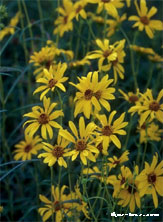
Coreopsis-- Love at first sight
Cuckoo pint -- Ardor
Daffodil -- Regard
Daisy -- Innocence, new-born, "I share your sentiment"
Fennel -- Flattery
Fern -- Sincerity
Forget-Me-Not -- True love
Furze or Gorse -- Enduring affection
French Marigold -- Jealousy
Gardenia -- Ecstasy
Gentian -- Loveliness
Geranium -- "You are childish"
Hare bell -- Grief
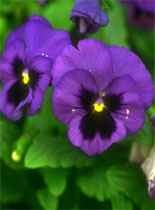
Heartsease -- "I am always thinking of you"
Honeysuckle -- Bonds of love
Heather -- Admiration
Hyacinth -- I am sorry, Please forgive me
Ice Plant -- "Your appearance freezes me"
Ivy -- Fidelity, friendship, marriage
Jasmine -- Grace
Jonquil -- "I hope for return of affection"
Lavender -- Luck, devotion
Lemon Balm -- Sympathy
Lilac -- First love
Lily -- Purity, modesty
Lily of the Valley -- Purity, the return of happiness
Lily, Calla -- Beauty
Marigold -- Health, grief or despair
Marjoram -- Kindness, courtesy
Myrtle -- Fidelity
Oregano -- Joy
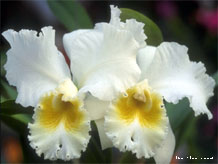
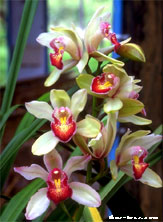
Orchid -- Love, beauty, refinement
Pansy -- Loving thoughts
Periwinkle -- Happy memory
Phlox -- Agreement
Poppy, red -- Consolation
Primrose -- I can't live without you
Rose, cabbage -- Ambassador of love
Rose, red -- Love
Rose, pink -- Grace, beauty
Rose, yellow -- Friendship
Rosemary -- Remembrance, constancy
Rue -- Contrition
Sage -- Gratitude, domestic virtue
Snowdrop -- Hope
Star of Bethlehem -- Purity
Sweet Pea -- Departure, tender memory
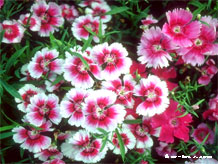
Sweet William -- Gallantry
Tuberose -- Voluptuousness
Tulip, red -- My perfect lover, Reclamation of love
Violet -- Loyalty, modesty, humility
Violet, blue -- Faithfulness
Wormwood -- Grief
Wheat -- Riches of the continuation of life
Willow, weeping -- Mourning
Wallflower -- Fidelity
Yew -- Sorrow
The Rose
The Rose is the flower whose meaning we most understand, but here are some details of the meaning of the Rose that may be of further interest.
Rose, Black – You are my obsession
Rose, Champagne – You are tender and loving
Rose, Leonidas – Sweet love
Rose, Nicole – You are graceful and elegant, aristocratic
Rose, Orange – You are my secret love
Rose, Pink – Brilliant complexion; the glow of your smile; perfect happiness
Rose, Red – Passionate love; I love you
Rose, Single Stems – Simplicity
Rose, White – I am worthy of you; spiritual love; Innocence and Purity; Secrecy and Silence
Rose, White and Red – We are inseparable
Rose, White and Red Mixed – Unity; Flower emblem of England
Rose, White, Dried – Death is preferable to loss of virtue
Rose, Yellow – Friendship; Jealousy; I am not worthy
Rose, Bridal – Happy LoveRose, Dark Crimson – Mourning
Rose, Hibiscus – Delicate beauty
Rose, Tea – I’ll remember always
Rose, Thornless – Love at first sight
Roses, Bouquet of Mature Blooms – Gratitude
Multiple Roses
Single bloom red Rose – Love at first sight or I still love you
Single Rose, any color – Gratitude or simplicity
2 Roses – Mutual feelings
3 Roses – I love you
7 Roses – I’m infatuated with you
9 Roses – We’ll be together forever
10 Roses – You are perfect
11 Roses – You are my treasured one
12 Roses – Be mine
13 Roses – Friends forever
15 Roses – I’m truly sorry
20 Roses – I’m truly sincere towards you
21 Roses – I’m dedicated to you
24 Roses – Forever yours
25 Roses – Congratulations
50 Roses – Unconditional love
99 Roses – I will love you all the days of my life
108 Roses – Will you marry me?
999 Roses – I love you till the end of time
What To Do
With the lists above you should be able to assemble a meaningful gift of flowers or a bouquet that conveys a complex thought. Wrap the flowers appropriately and present them in a significant manner. Then, just to be certain that your efforts are not misinterpreted , include a card that fully explains the meaning of your flowers.
After a few flower presentations you should be able to drop the explanatory notes and begin enjoying and sharing the silent language of flowers.
วันเสาร์ที่ 4 ตุลาคม พ.ศ. 2551

วันอาทิตย์ที่ 7 กันยายน พ.ศ. 2551
The Secrets of Flowers....
The Secrets of Flowers....
....and Flower Essences


What does the term "flower essence" mean to you?
Have you even heard of flower essences, and if so, do you know what they are?
As a quick guess, you would probably say they are a substance extracted from flowers. Perhaps, you may think, flower essences are similar to essential oils, the volatile aromatic oils extracted directly from flowers and other plant material. While it is true that flowers are the starting point in making flower essences, the actual flower essences are something quite different from herbal extracts or distilled oils.


In talking about "flower essences"....
I am also including a number of similar healing remedies such as tree essences, gem essences, and shell essences. In fact, the list of natural objects that you can make essences from is endless, and I'll now begin to explain why.
Flower essences (or gem essences, shell essences, etc.) are actually an "energy medicine". They are capable of healing us at all levels of our being: physical, emotional, mental and spiritual.
Flower essences are a mixture of pure spring water, usually with an added preservative such as alcohol or vinegar, and they contain no plant material or biochemically active ingredients.
What does this mean? And how can a remedy of pure water and alcohol ever work?


Energy patterns in water.
To understand the concept of "energy medicine", let's first take a look at the work of a Japanese researcher, Dr Masaru Emoto. Dr Emoto has developed a technique of snap-freezing water, and viewing a slice of the resulting ice under a microscope. What he has discovered is perhaps both the most revolutionary and the most revelationary discovery ever. Water contains patterns of energy. And these patterns are the result of where the water comes from, what has happened to the water, and how it has been treated.
Water that is from a pure spring, when photographed, typically shows an amazingly beautiful, regular crystalline structure, rather like a snowflake; while water from a polluted river or lake will usually have an ugly, irregular, blob-like shape. Now this doesn't sound too surprising. Except Dr Emoto has extended his research further than any scientist normally would...
If he takes a sample of the polluted water and speaks words of love and gratitude to it, or even tapes a piece of paper with these words to its container, this water then exhibits a beautiful crystalline pattern, very similar to the spring water. Playing beautiful soothing music to the water has the same effect. Likewise, taking the pure spring water and speaking words of abuse or hate to it causes it to take on a pattern similar to the polluted water.
Dr Emoto has performed many experiments on samples of water from a multitude of different sources, taking hundreds of photographs in the process. His work is described in a number of books, and also on several websites, including his own, and the "Project of Love and Thanks to Water" website. And his results are consistent across many sources of water around the world, using many different languages.


Dr Emoto's work highlights two key pieces of information that relate to how flower essences work:
Water is capable of holding patterns of energy, and for very long periods of time. The pattern you see in a particular sample of water will remain that way until changed by some external factor; it won't disappear within a few minutes, or decay slowly over time.
Anyone (and that includes you!) can change the patterns in water, simply by the power of intent. If you want to purify water, all you need to do is to focus on it for a few moments and express your gratitude to it for its live-giving properties. Or you can play a beautiful Mozart sonata to the water, or tape a picture of Jesus Christ or the Buddha to its container. Your intent can influence and change the energy that the water carries. And the fact that you can also change it negatively with hate-filled words should give you cause to think more carefully about what you say and how you say it (remember, our bodies are more than 70% water in composition)!


We are one with all life.
Another item of information vital to understanding flower essences comes from the teachings of a remarkable spiritual teacher, Barry Long. In his tape, "A Journey in Consciousness", Barry makes the bold assertion that "we are life; there is no other life in the Cosmos other than us".
Barry Long goes on to explain that deep inside our Being, we are all part of the One Life of the Cosmos, but that in this 3D reality we each inhabit a "spacesuit". We identify with our own spacesuit, or physical body, so completely that we actually believe that we are separate from each other and from the rest of the Universe. This belief, however, is merely a figment of our perception of reality.
Many thousands of years ago, when humankind was young, we looked out of our spacesuits, and what we saw all around us was the crystal clear reflection of our own nature. This is what we now call "Nature". Originally, we recognized Nature as part of ourselves, part of the One true life, and we naturally loved it. Indigenous people, such as the Aboriginal people of Australia or Native Americans, still understand this, although their awareness is sadly fading with the gradual loss of their cultural and spiritual heritage.
Even though most of us struggle to truly comprehend those words, deep, deep within us we are still able to realize it. Why is it when we go out into Nature, we feel so energized and revitalized? It is because we are reconnecting with our own true Being. Our natural nature is to love Nature.


So finally, we return to the original question of what flower essences really are....
Flower essences are vibrational patterns of energy in pure water representing specific conditions or issues that we as humans experience. Each pattern may be of a physical, mental, emotional or spiritual state or condition. For example, the essence may represent the physical condition of cells retaining too much water… or the emotion of deep sadness and grief… or the mental state of stuck thinking, the mind going round and round in circles… or at the spiritual level, wanting to experience Divine Love.


Flower essence makers start by experiencing, or imagining, the condition that they wish to make the essence for.
They may work in the same manner as the first flower essence maker of our modern era, Dr Edward Bach, who keenly observed various mental and emotional states in other people, then experienced them himself prior to finding the remedy for that condition. Or the flower essence maker might simply realize that certain human behaviors or conditions are due to particular underlying causes, and then look for that remedy.
Having identified the need for certain remedies, essence makers go out into Nature and find themselves drawn to certain elements within Nature: flowers, plants, berries, trees, stones or shells. For them the particular natural object to which they are drawn embodies the particular condition (grief, mental agitation, etc) they are seeking. The natural object takes on that aspect of humanity and reflects it back to us – literally, becoming the crystal clear reflection of our own nature, as Barry Long stated.
The next step, making the essence, traditionally involves placing the flower or gem in pure water and leaving it in the sun for a period of time. However, modern flower essence makers may dispense with this, instead, placing pure water next to the object and inviting the energy into the water – just as Dr Emoto did in his experiments. This method is much more practical for larger objects such as trees or large rocks, which can't be placed in a bowl of water! An even more up-to-date innovation in essence making involves taking a photograph of the flower or plant, thus capturing its energy on film. The actual liquid "essence" can be made later directly from the photograph.


What is common to all these essence-making methods...
...is the intent and the awareness of the flower essence maker. They need to be very clear about what the essence is for, and be able to bring the vibrational pattern of that condition or state through into the water that they are energizing as their base essence (or mother tincture). This is the true art of the essence maker.
In deciding whether to use essences at all, and which ones to use...
...remember how important the consciousness of the flower essence maker is. For example, if you are looking for essences to help you through an accelerated period of spiritual growth, you really need to know that the producer of those essences has "been there" too. Apart from checking out that producer's story, ask yourself whether a particular essence range addresses the sorts of issues you are looking to resolve, and whether the essences resonate for you.
The more you delve into the fascinating world of flower essence therapy, the more in touch you become with Nature and all her healing properties, and the more you connect with your own true nature.
This article was originally published in the November 2004 issue of the New Zealand Body, Mind & Spirit Magazine.
To read a basic explanation of flower essences and their natural healing properties, see Part One.

....and Flower Essences
What does the term "flower essence" mean to you?
Have you even heard of flower essences, and if so, do you know what they are?
As a quick guess, you would probably say they are a substance extracted from flowers. Perhaps, you may think, flower essences are similar to essential oils, the volatile aromatic oils extracted directly from flowers and other plant material. While it is true that flowers are the starting point in making flower essences, the actual flower essences are something quite different from herbal extracts or distilled oils.
In talking about "flower essences"....
I am also including a number of similar healing remedies such as tree essences, gem essences, and shell essences. In fact, the list of natural objects that you can make essences from is endless, and I'll now begin to explain why.
Flower essences (or gem essences, shell essences, etc.) are actually an "energy medicine". They are capable of healing us at all levels of our being: physical, emotional, mental and spiritual.
Flower essences are a mixture of pure spring water, usually with an added preservative such as alcohol or vinegar, and they contain no plant material or biochemically active ingredients.
What does this mean? And how can a remedy of pure water and alcohol ever work?
Energy patterns in water.
To understand the concept of "energy medicine", let's first take a look at the work of a Japanese researcher, Dr Masaru Emoto. Dr Emoto has developed a technique of snap-freezing water, and viewing a slice of the resulting ice under a microscope. What he has discovered is perhaps both the most revolutionary and the most revelationary discovery ever. Water contains patterns of energy. And these patterns are the result of where the water comes from, what has happened to the water, and how it has been treated.
Water that is from a pure spring, when photographed, typically shows an amazingly beautiful, regular crystalline structure, rather like a snowflake; while water from a polluted river or lake will usually have an ugly, irregular, blob-like shape. Now this doesn't sound too surprising. Except Dr Emoto has extended his research further than any scientist normally would...
If he takes a sample of the polluted water and speaks words of love and gratitude to it, or even tapes a piece of paper with these words to its container, this water then exhibits a beautiful crystalline pattern, very similar to the spring water. Playing beautiful soothing music to the water has the same effect. Likewise, taking the pure spring water and speaking words of abuse or hate to it causes it to take on a pattern similar to the polluted water.
Dr Emoto has performed many experiments on samples of water from a multitude of different sources, taking hundreds of photographs in the process. His work is described in a number of books, and also on several websites, including his own, and the "Project of Love and Thanks to Water" website. And his results are consistent across many sources of water around the world, using many different languages.
Dr Emoto's work highlights two key pieces of information that relate to how flower essences work:
Water is capable of holding patterns of energy, and for very long periods of time. The pattern you see in a particular sample of water will remain that way until changed by some external factor; it won't disappear within a few minutes, or decay slowly over time.
Anyone (and that includes you!) can change the patterns in water, simply by the power of intent. If you want to purify water, all you need to do is to focus on it for a few moments and express your gratitude to it for its live-giving properties. Or you can play a beautiful Mozart sonata to the water, or tape a picture of Jesus Christ or the Buddha to its container. Your intent can influence and change the energy that the water carries. And the fact that you can also change it negatively with hate-filled words should give you cause to think more carefully about what you say and how you say it (remember, our bodies are more than 70% water in composition)!


We are one with all life.
Another item of information vital to understanding flower essences comes from the teachings of a remarkable spiritual teacher, Barry Long. In his tape, "A Journey in Consciousness", Barry makes the bold assertion that "we are life; there is no other life in the Cosmos other than us".
Barry Long goes on to explain that deep inside our Being, we are all part of the One Life of the Cosmos, but that in this 3D reality we each inhabit a "spacesuit". We identify with our own spacesuit, or physical body, so completely that we actually believe that we are separate from each other and from the rest of the Universe. This belief, however, is merely a figment of our perception of reality.
Many thousands of years ago, when humankind was young, we looked out of our spacesuits, and what we saw all around us was the crystal clear reflection of our own nature. This is what we now call "Nature". Originally, we recognized Nature as part of ourselves, part of the One true life, and we naturally loved it. Indigenous people, such as the Aboriginal people of Australia or Native Americans, still understand this, although their awareness is sadly fading with the gradual loss of their cultural and spiritual heritage.
Even though most of us struggle to truly comprehend those words, deep, deep within us we are still able to realize it. Why is it when we go out into Nature, we feel so energized and revitalized? It is because we are reconnecting with our own true Being. Our natural nature is to love Nature.

So finally, we return to the original question of what flower essences really are....
Flower essences are vibrational patterns of energy in pure water representing specific conditions or issues that we as humans experience. Each pattern may be of a physical, mental, emotional or spiritual state or condition. For example, the essence may represent the physical condition of cells retaining too much water… or the emotion of deep sadness and grief… or the mental state of stuck thinking, the mind going round and round in circles… or at the spiritual level, wanting to experience Divine Love.
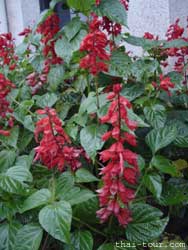
Flower essence makers start by experiencing, or imagining, the condition that they wish to make the essence for.
They may work in the same manner as the first flower essence maker of our modern era, Dr Edward Bach, who keenly observed various mental and emotional states in other people, then experienced them himself prior to finding the remedy for that condition. Or the flower essence maker might simply realize that certain human behaviors or conditions are due to particular underlying causes, and then look for that remedy.
Having identified the need for certain remedies, essence makers go out into Nature and find themselves drawn to certain elements within Nature: flowers, plants, berries, trees, stones or shells. For them the particular natural object to which they are drawn embodies the particular condition (grief, mental agitation, etc) they are seeking. The natural object takes on that aspect of humanity and reflects it back to us – literally, becoming the crystal clear reflection of our own nature, as Barry Long stated.
The next step, making the essence, traditionally involves placing the flower or gem in pure water and leaving it in the sun for a period of time. However, modern flower essence makers may dispense with this, instead, placing pure water next to the object and inviting the energy into the water – just as Dr Emoto did in his experiments. This method is much more practical for larger objects such as trees or large rocks, which can't be placed in a bowl of water! An even more up-to-date innovation in essence making involves taking a photograph of the flower or plant, thus capturing its energy on film. The actual liquid "essence" can be made later directly from the photograph.
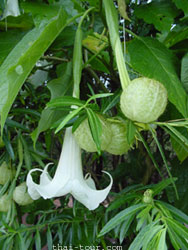
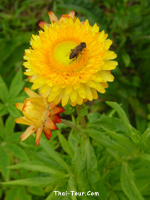
What is common to all these essence-making methods...
...is the intent and the awareness of the flower essence maker. They need to be very clear about what the essence is for, and be able to bring the vibrational pattern of that condition or state through into the water that they are energizing as their base essence (or mother tincture). This is the true art of the essence maker.
In deciding whether to use essences at all, and which ones to use...
...remember how important the consciousness of the flower essence maker is. For example, if you are looking for essences to help you through an accelerated period of spiritual growth, you really need to know that the producer of those essences has "been there" too. Apart from checking out that producer's story, ask yourself whether a particular essence range addresses the sorts of issues you are looking to resolve, and whether the essences resonate for you.
The more you delve into the fascinating world of flower essence therapy, the more in touch you become with Nature and all her healing properties, and the more you connect with your own true nature.
This article was originally published in the November 2004 issue of the New Zealand Body, Mind & Spirit Magazine.
To read a basic explanation of flower essences and their natural healing properties, see Part One.
สมัครสมาชิก:
บทความ (Atom)